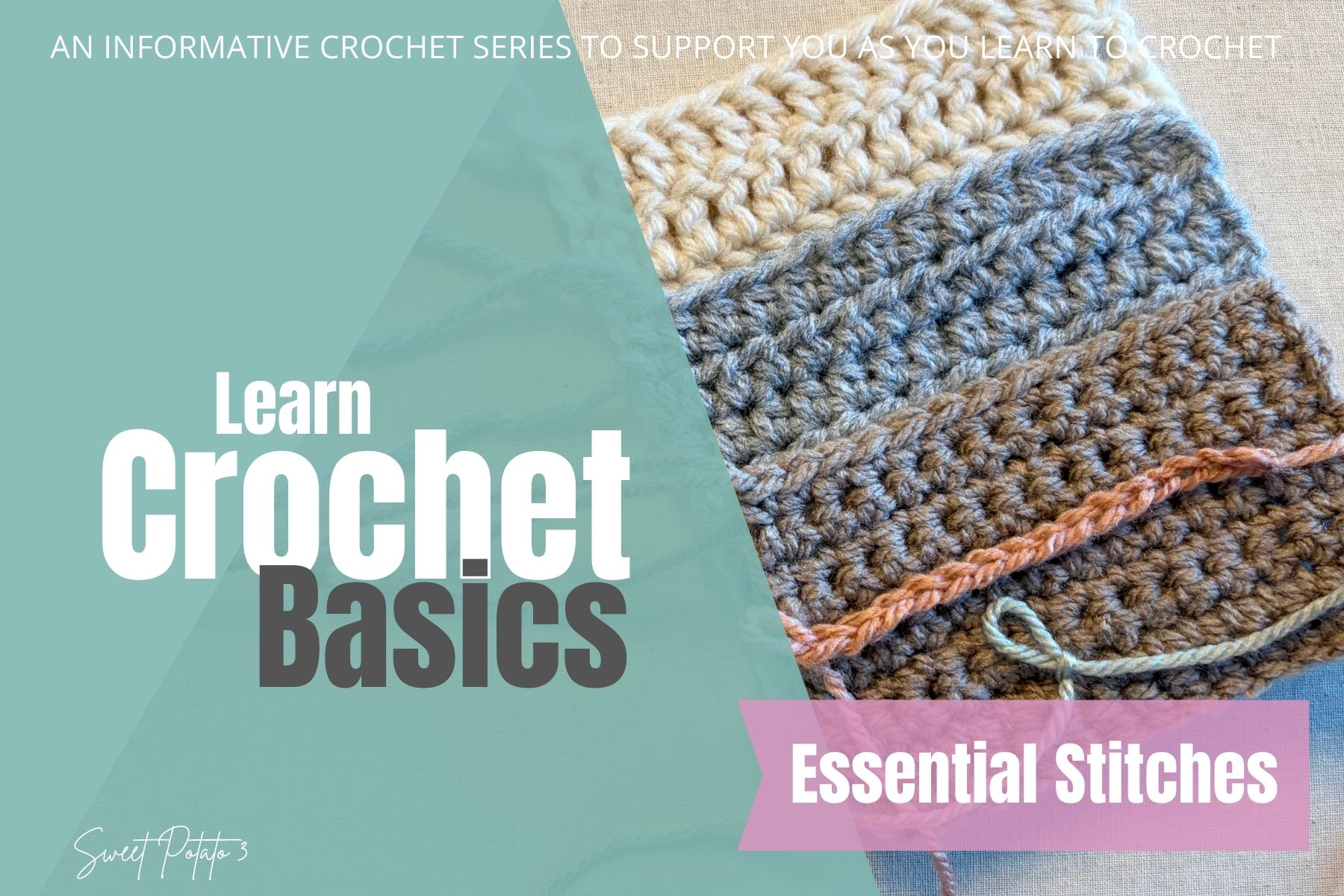
Once you’re comfortable holding your hook and managing your yarn, it’s time to talk about the stitches you’ll see over and over again in crochet patterns.
Crochet may look complex, but nearly everything is built from a small group of foundational stitches. Learning and practicing these core stitches will give you the confidence to tackle new projects and understand how more advanced stitches are formed.
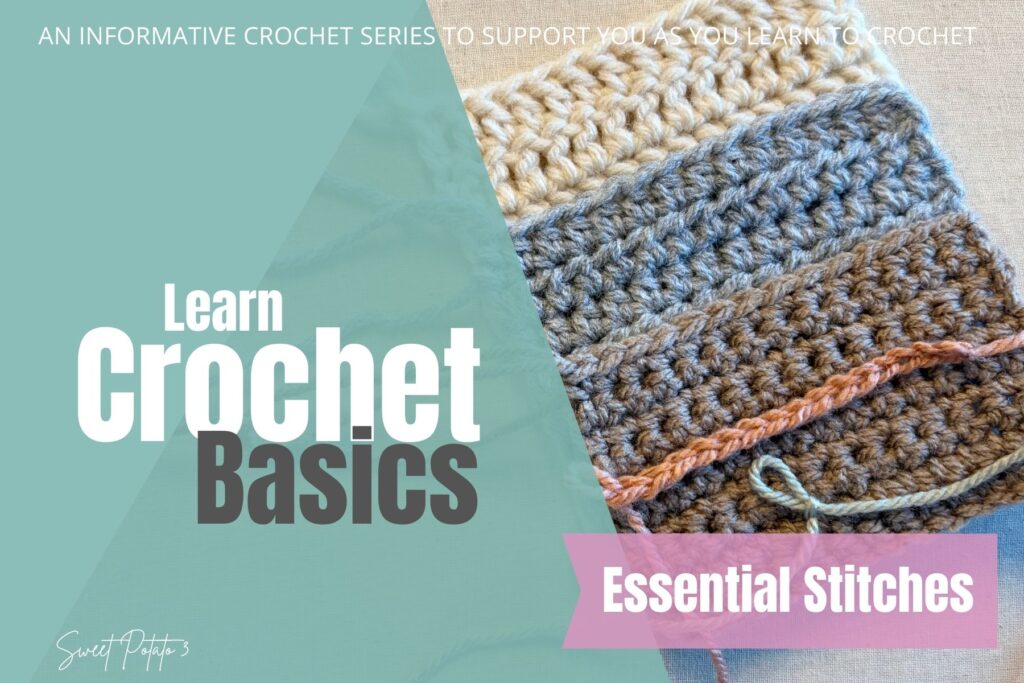

Crochet Stitches: The Foundation
At its core, crochet is a series of loops pulled through loops. While there are hundreds of named stitches and stitch patterns, most of them are simply variations or combinations of a few basics.
In this lesson, we’ll cover the essential stitches every beginner should become familiar with.
The Slip Knot
A slip knot is the adjustable loop used to begin most crochet projects. It allows you to tighten or loosen the loop on your hook, creating the perfect starting point for your foundation chain or foundation row.
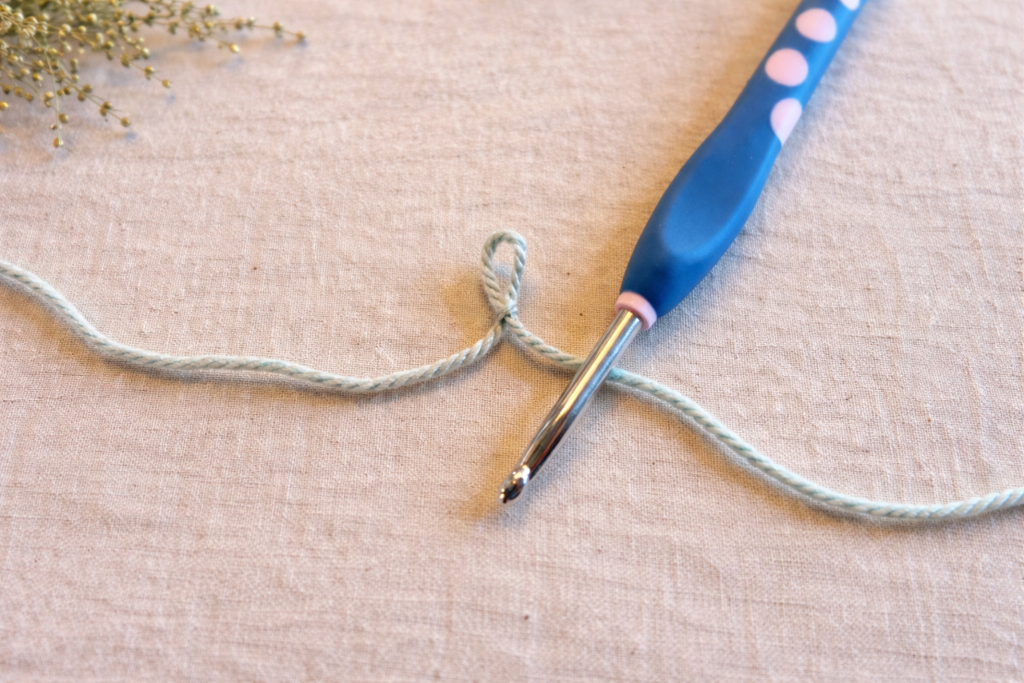
A slip knot is the very first step in most crochet projects and creates the adjustable loop you’ll place on your hook. It’s quick to make and easy to adjust, giving you a comfortable starting point before working your foundation chain. In the video below, I’ll walk you through exactly how to make a slip knot so you can get started with confidence.
The Chain Stitch (ch)
The chain stitch is the starting point for most crochet projects.
You’ll use chains to:
- Create a foundation row
- Form turning chains
- Build decorative elements
- Start projects worked in rows
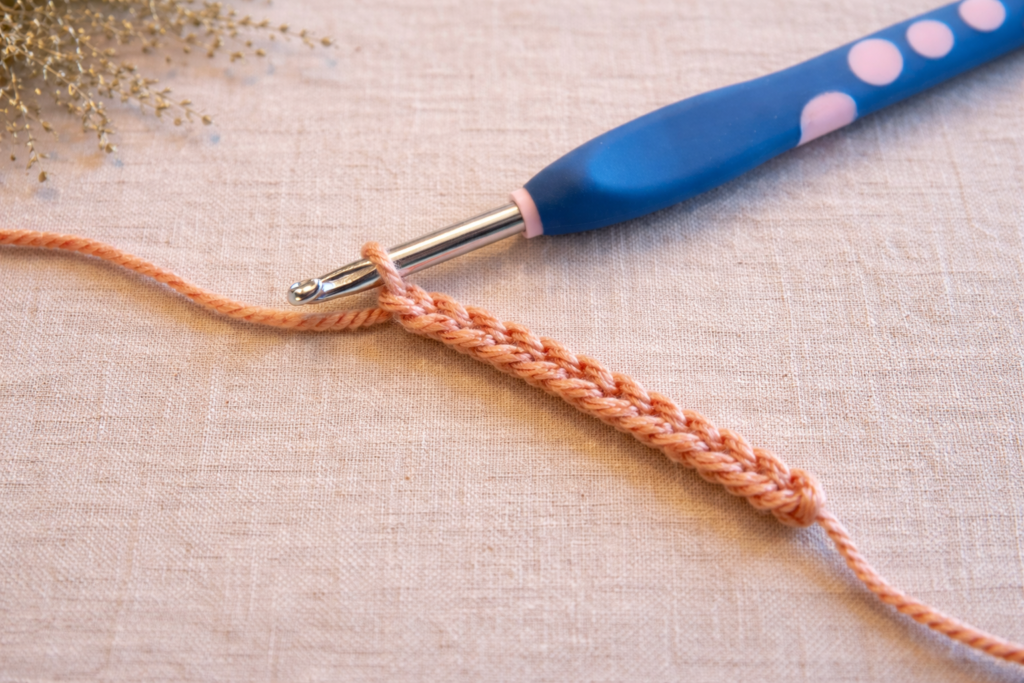
Chains don’t usually count as finished stitches on their own, but they create the structure everything else is built upon.
Beginner tip: Try not to make your chains too tight. Loose, even chains make it much easier to work into them later.
Single Crochet Stitch (sc)
The single crochet is often the first stitch beginners learn.
It creates:
- A dense, sturdy fabric
- Clean, even rows
- A great base for learning stitch placement
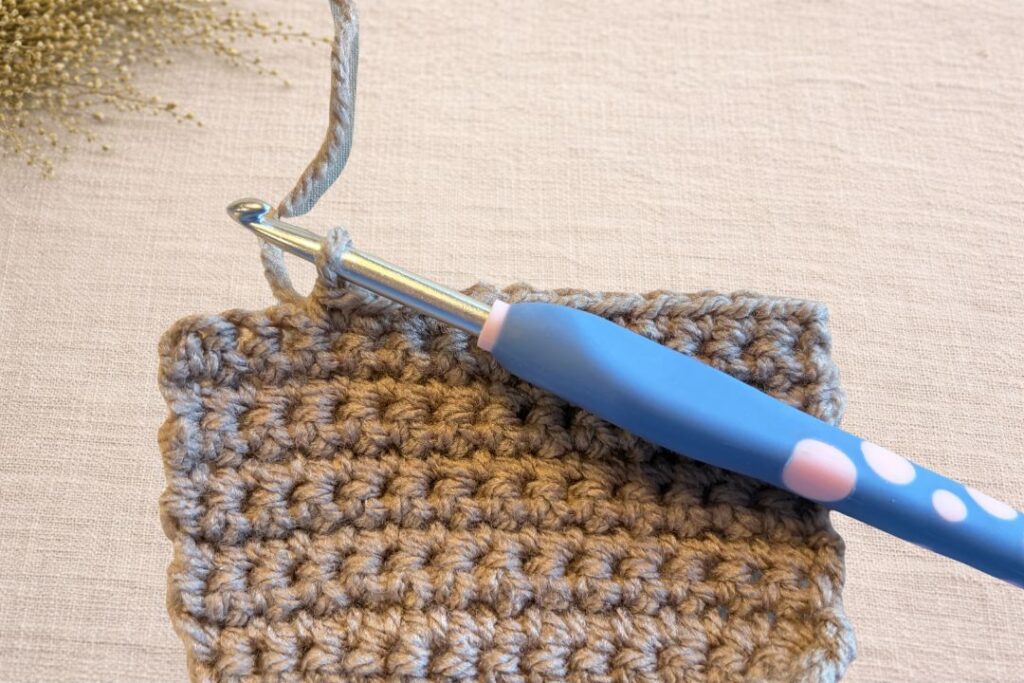
Single crochet is commonly used in:
- Dishcloths
- Amigurumi
- Borders
- Baby blankets
Half Double Crochet Stitch (hdc)
The half double crochet sits between single crochet and double crochet in height.
It creates:
- Slightly taller stitches than single crochet
- Soft texture with gentle drape
- Faster progress without being too tall
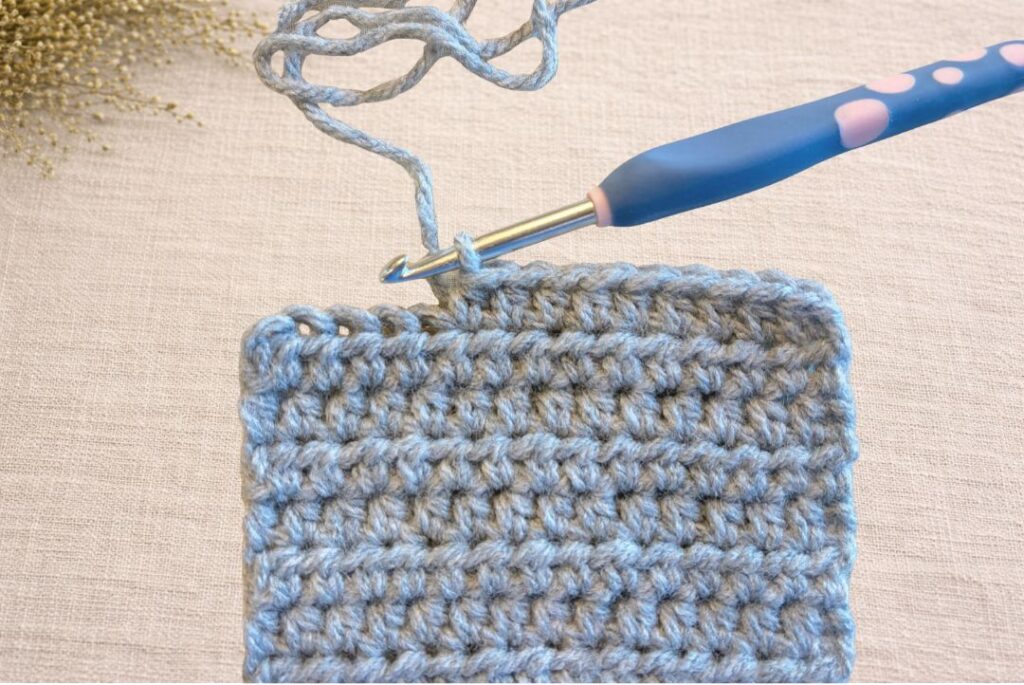
This stitch is popular in blankets and garments because it balances speed and texture.
Double Crochet Stitch (dc)
The double crochet is one of the most widely used stitches in crochet.
It creates:
- Taller stitches
- More open fabric
- Faster-growing projects
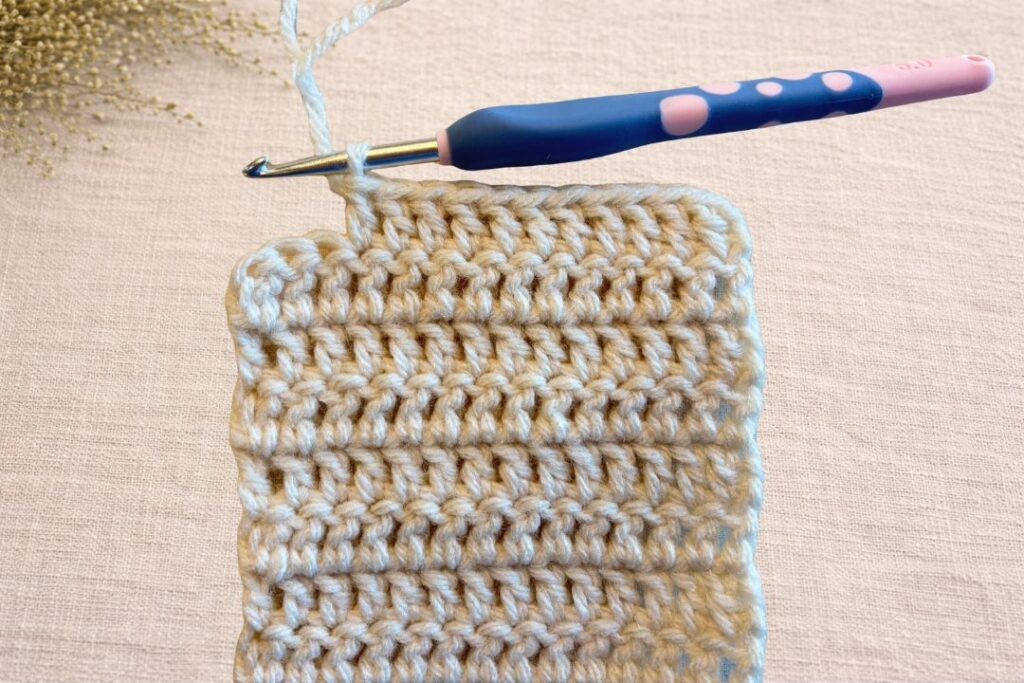
Double crochet is commonly seen in:
- Granny squares
- Blankets
- Shawls
- Clothing
How Most Crochet Stitches Are Built
Once you understand these core stitches, many others will start to make sense.
Most crochet stitches are created by:
- Adding or removing yarn overs
- Changing where the hook is inserted
- Combining stitches across multiple loops
That’s why practicing these basics is so important—they form the foundation for everything that comes next.
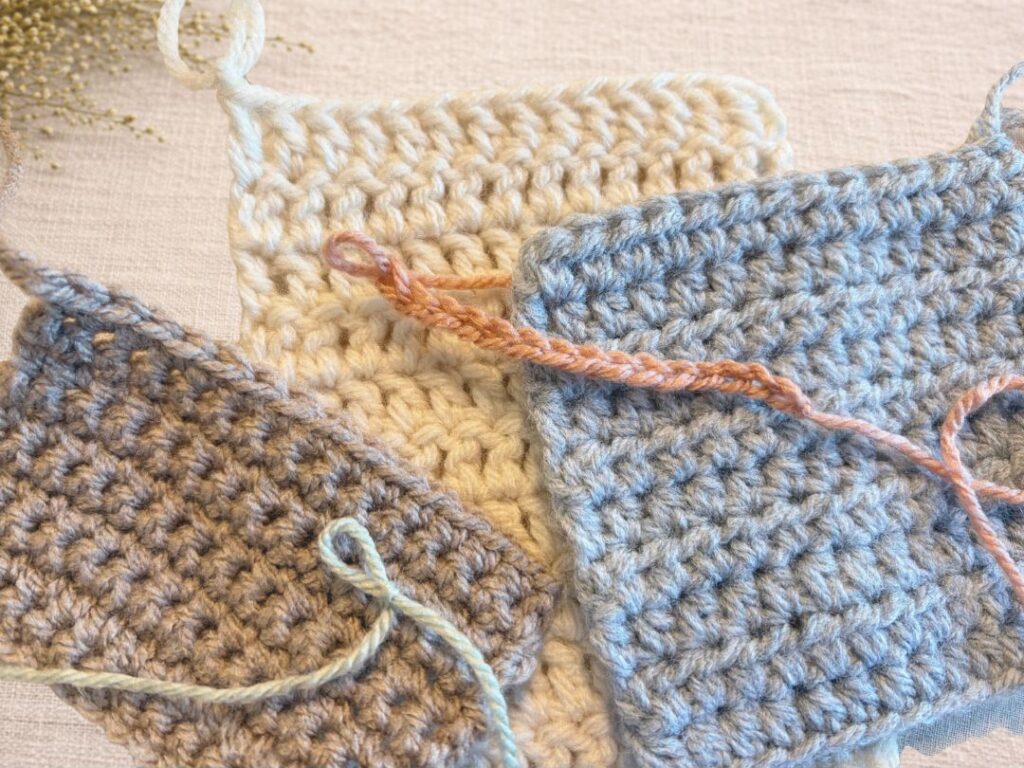
Practice One Stitch at a Time
It can be tempting to try all the stitches at once, but learning happens best when you slow down.
Try:
- Practicing one stitch per swatch
- Using the same yarn and hook for consistency
- Focusing on even stitches rather than speed
Repetition builds muscle memory, and confidence comes with time.
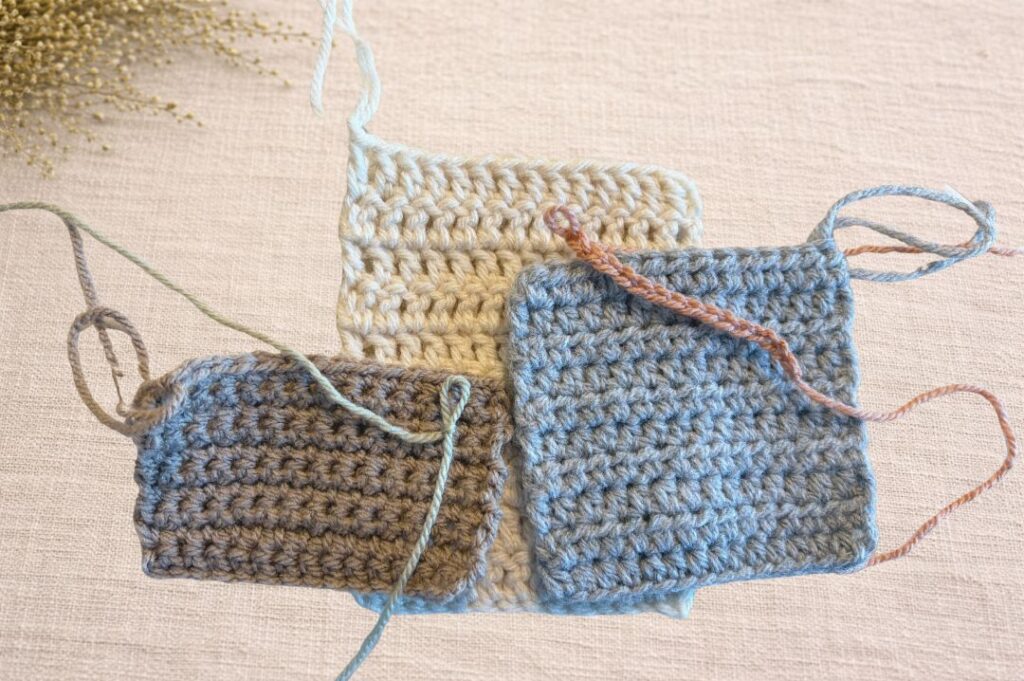
A Gentle Reminder
Every crocheter—no matter how experienced—started with these same stitches. Uneven rows, missed stitches, and small mistakes are part of the learning process.
You don’t need to master every stitch right away. Understanding the basics and practicing regularly will take you farther than rushing ahead.
Up next: Starting a Crochet Project — exploring different ways to begin, including chains, magic rings, and foundation stitches.
Take your time, enjoy the rhythm of the stitches, and remember: every row you crochet is progress