Before you crochet your first stitch, it helps to understand the basic tools and materials used in crochet. Walking into a yarn aisle or browsing online can feel overwhelming at first—but the good news is that you don’t need much to get started.
In this series, we’ll cover the basic supplies, beginner-friendly yarn options, how crochet hooks are sized, how to read a yarn label, and how to choose the right yarn and hook for your first project or to use as you learn the basic stitches.


Basic Crochet Supplies You’ll Need
To begin crocheting, you only need a few simple tools:
- Yarn – Choose a beginner-friendly yarn (we’ll talk more about this below).
- Crochet hook – The size will depend on the yarn you select, but I’ll share recommendations below.
- Scissors – Any small, sharp scissors will work.
- Tapestry needle – Used for weaving in ends.
- Stitch markers (optional but helpful) – Great for marking the beginning or end of a row or round.
- Measuring Tape – Used to check gauge as your skills grow.
That’s it! You don’t need a full collection of tools to start—just the basics will carry you a long way.
Yarn Types: What Works Best for Beginners
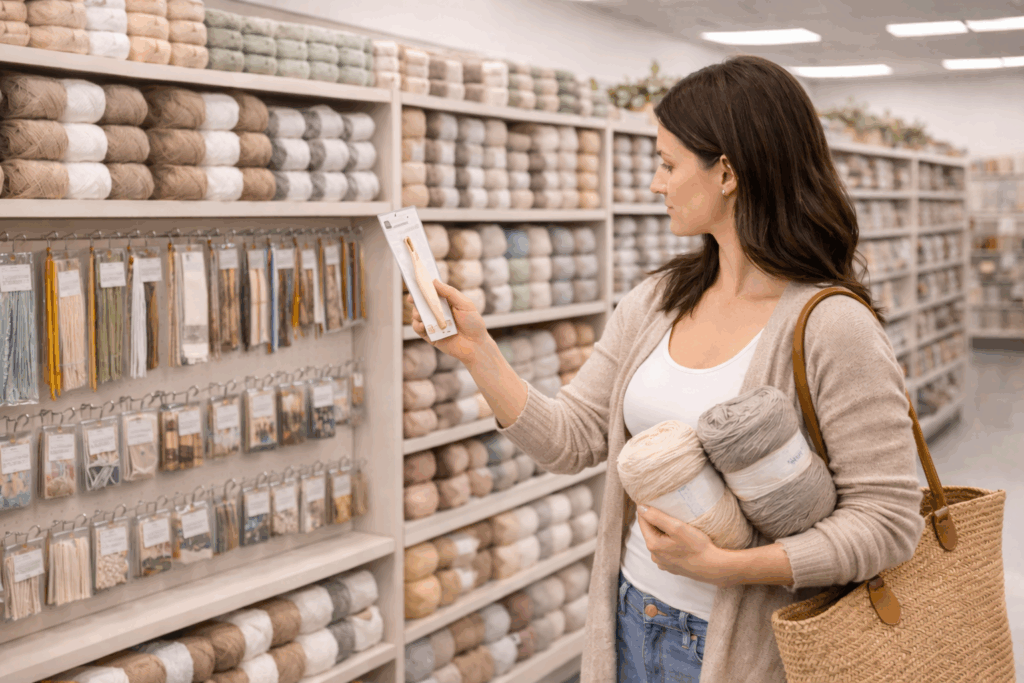
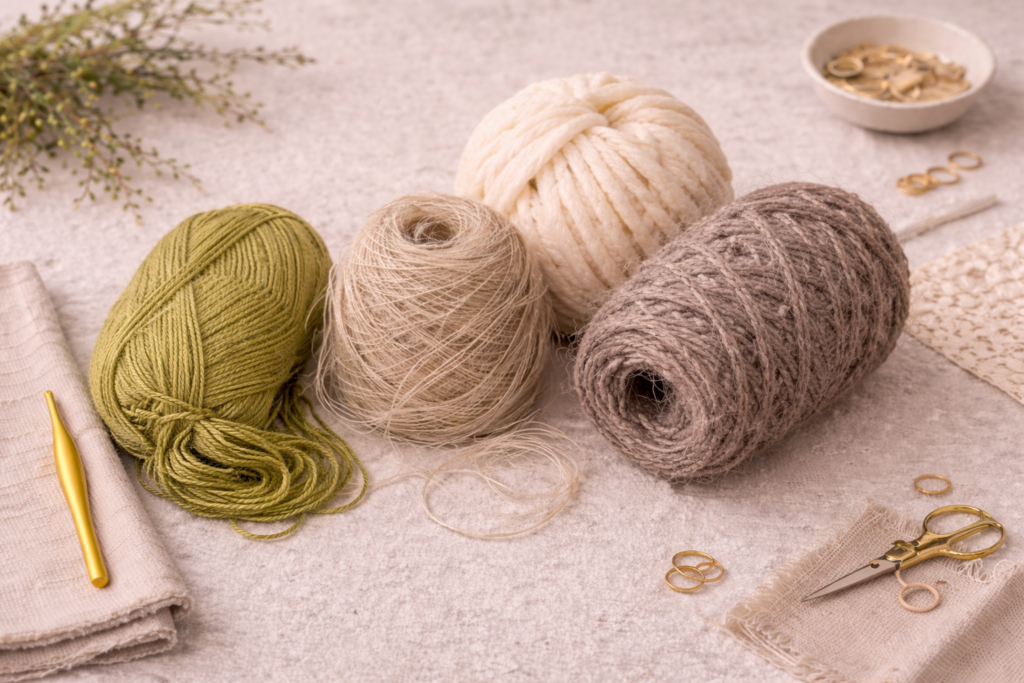
Yarn comes in many fibers, textures, and thicknesses. For beginners, choosing the right yarn can make learning much easier.
Beginner-Friendly Yarn Options
Look for yarn that is:
- Smooth (not fuzzy) – This makes it easier to see your stitches and easier to undo mistakes.
- Medium weight (worsted weight/category 4) – Easy to handle and widely available. Yarn that is too thin or too bulky can make it difficult to work with. A medium yarn is a great starting point to get comfortable with; you can branch out and try other weights as your skill set improves.
- Light to medium in color – Dark yarn can make stitches more difficult to see. A light or neutral color allows for easy stitch definition and placement.
Good fiber choices for beginners:
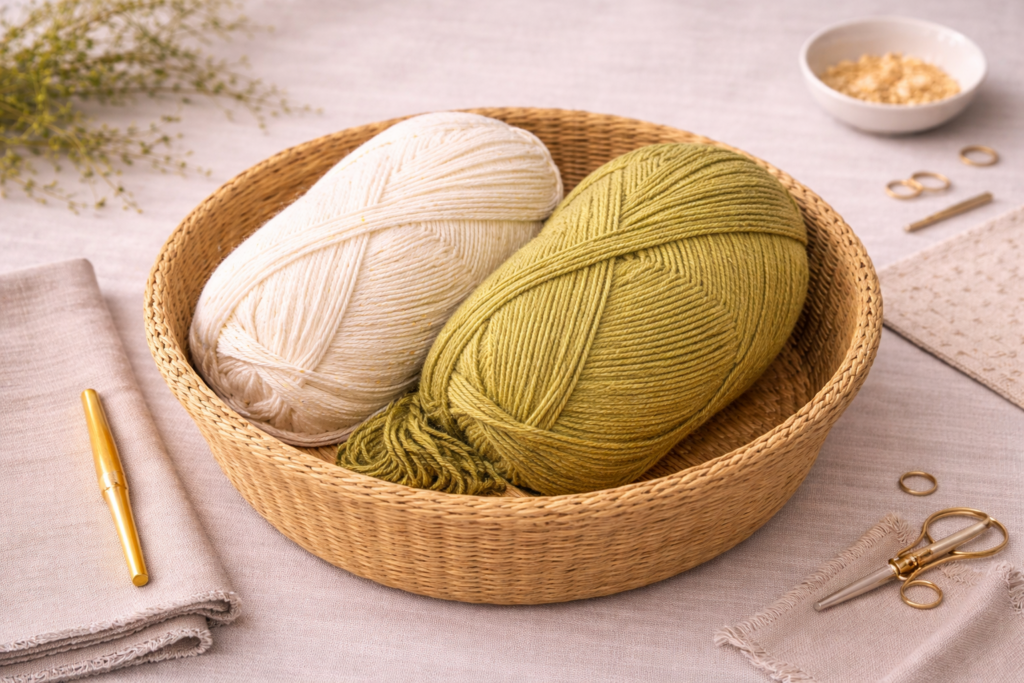
Acrylic & acrylic blends. These yarns are easy to find at local stores and are going to be more budget-friendly. They work up well and typically the fibers within the strand of yarn do not split. Spitting yarn can make learning trickier, and we want to make this a fun and easy learning experience.
These fibers are affordable, easy to find, and forgiving while you’re learning.
Yarn Types to Avoid at First
- Eyelash or novelty yarns
- Very fine weight or thin yarns (lace or fingering weight)
- Super bulky or highly textured yarns
These can be fun later, but they tend to make learning more difficult.
Understanding Crochet Hook Sizes
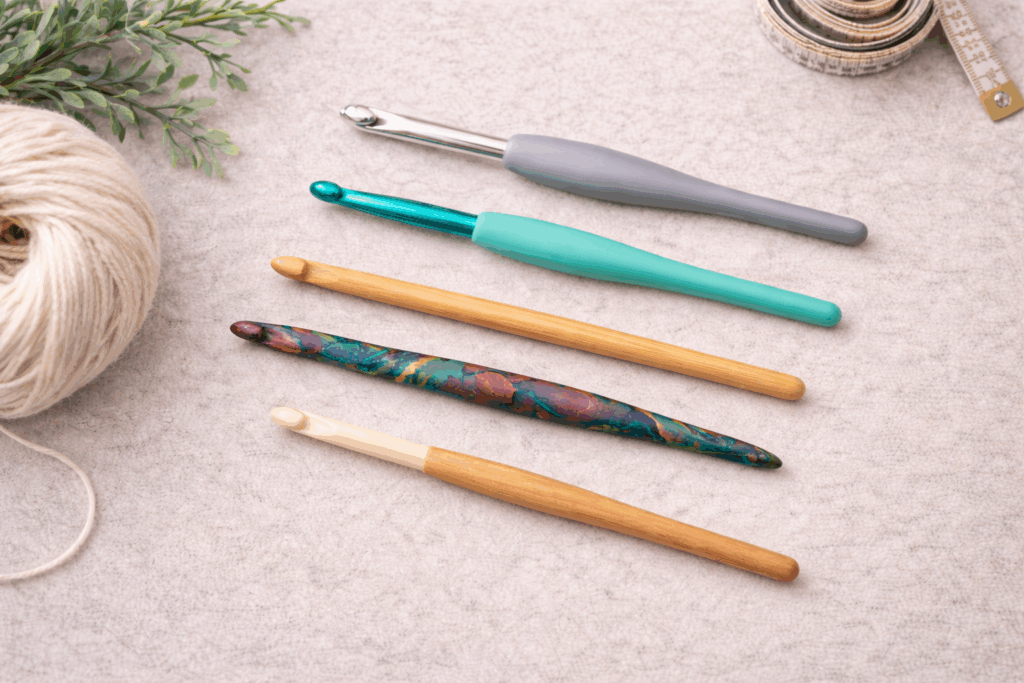
Crochet hooks come in different sizes and materials. For beginners, the size of your hook matters more than what the hook is made out of.
- Hook sizes are usually labeled with letters, numbers, or millimeters.
- The yarn label will suggest a recommended hook size for that particular yarn.
- A 5.0 mm (H/8) or 5.5 mm (I/9) hook is very common for beginner projects using worsted-weight yarn.
As for the material of the hook, when you start shopping, you will find there are different types to choose from:
- Metal hooks glide easily and are popular for beginners. I personally recommend a metal hook to begin with.
- Plastic or resin hooks can also work well but sometimes they don’t slide as easily.
- Wood hooks have more grip, which some crocheters love later on.
There’s no “best” hook—just what feels comfortable in your hand. As I recommended above, I think a metal hook is a great one to start with (plus, you can grab one at most local craft stores for a reasonable price). The other thing I prefer with my crochet hooks is to get one with a soft handle grip or ergonomic handle. This option is only for comfort and is more important when you crochet for long periods of time.
How to Read a Yarn Label
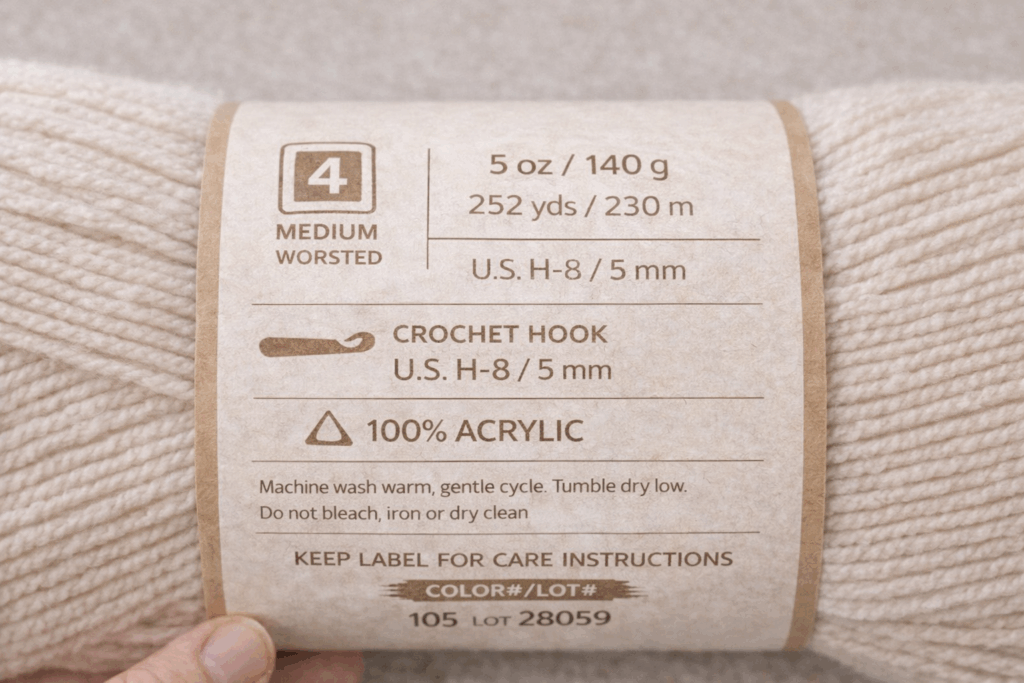
Yarn labels contain a lot of helpful information. Here’s what to focus on when you’re just starting:
- Yarn weight – Look for a number (like 4) or a word (like “worsted”). This is the most common weight of yarn. As you learn, stay away from finer or bulkier yarns.
- Recommended hook size – A great starting point for beginners. Again, most worsted-weight yarns will suggest a crochet hook H (5mm) or crochet hook I (5.5mm).
- Fiber content – Acrylic, cotton, wool, or blends. An acrylic or acrylic blend is recommended as you start to learn.
- Yardage – Helps you know how much yarn you’re buying. One or two skeins is all you will need as you practice stitches.
- Care instructions – Especially important for gifts or blankets.
You don’t need to understand everything on the label right away. Focus on yarn weight and hook size to start.
Choosing Yarn and a Hook for Your First Project
For your first crochet project, keep things simple.
A great beginner combination:
- Worsted-weight yarn (category 4)
- 5.0–5.5 mm crochet hook (I personally prefer the 5.5 mm crochet hook I)
- Light or neutral yarn color
Most people will begin with a Learn to Crochet class of some sort and you will be guided through a series of learning stitches. After that, consider simple projects like dishcloths, scarves, or small swatches, these are perfect for practicing stitches and building confidence.
As you gain experience, you’ll learn how different yarns and hooks behave—and how to adjust based on your preferences and projects.
A Gentle Reminder
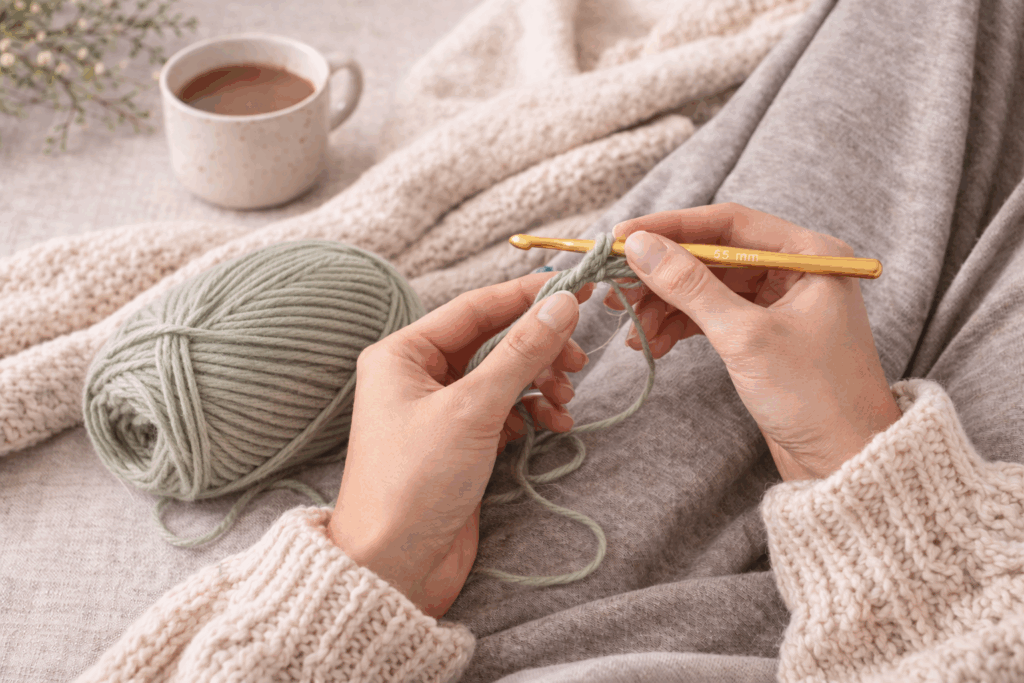
You don’t need to get everything perfect right away. Learning crochet is about practice, patience, and curiosity. The right supplies make learning easier, but confidence comes from picking up your hook and giving it a try.
Up next: In Series 3, we will discuss more about the basic tools you will need in addition to your yarn & hook.
Take your time, enjoy the process, and remember: every crocheter starts right where you are.