Once you’ve gathered your supplies, the next question most beginners ask is:
“Am I holding my hook the right way?”

The short answer is—there’s no single right way. How you hold your crochet hook and manage your yarn tension is a personal process, and it often changes as you gain experience. In this lesson, we’ll explore common ways to hold your hook, how tension works, and what to focus on as you practice.
Common Ways to Hold a Crochet Hook
Most crocheters naturally fall into one of two main hook grips. Neither is better than the other—it’s all about comfort and control.
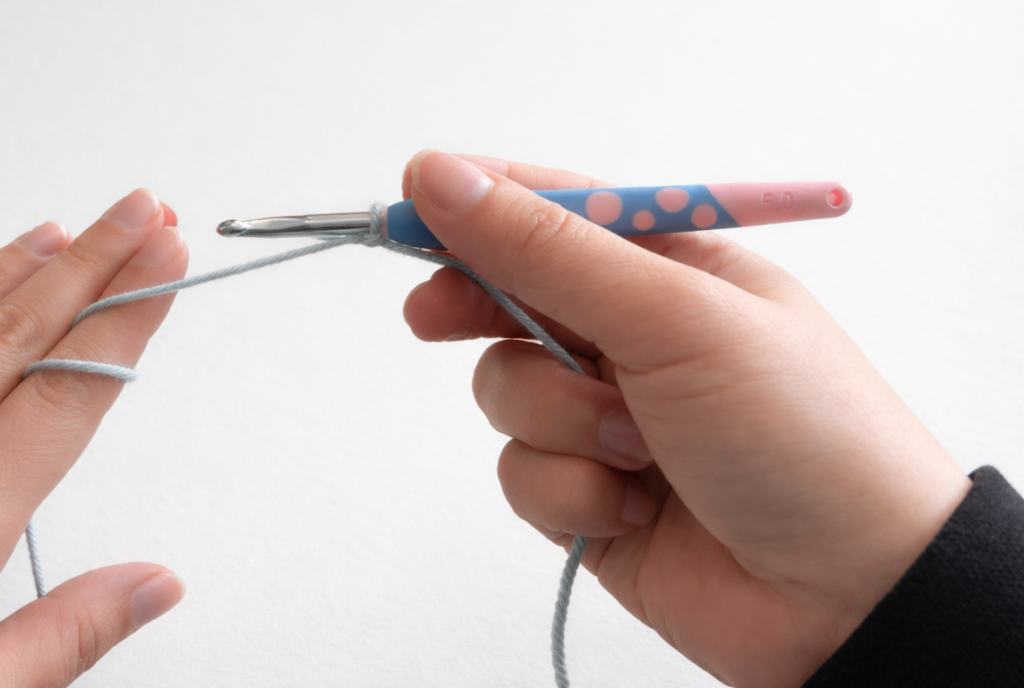
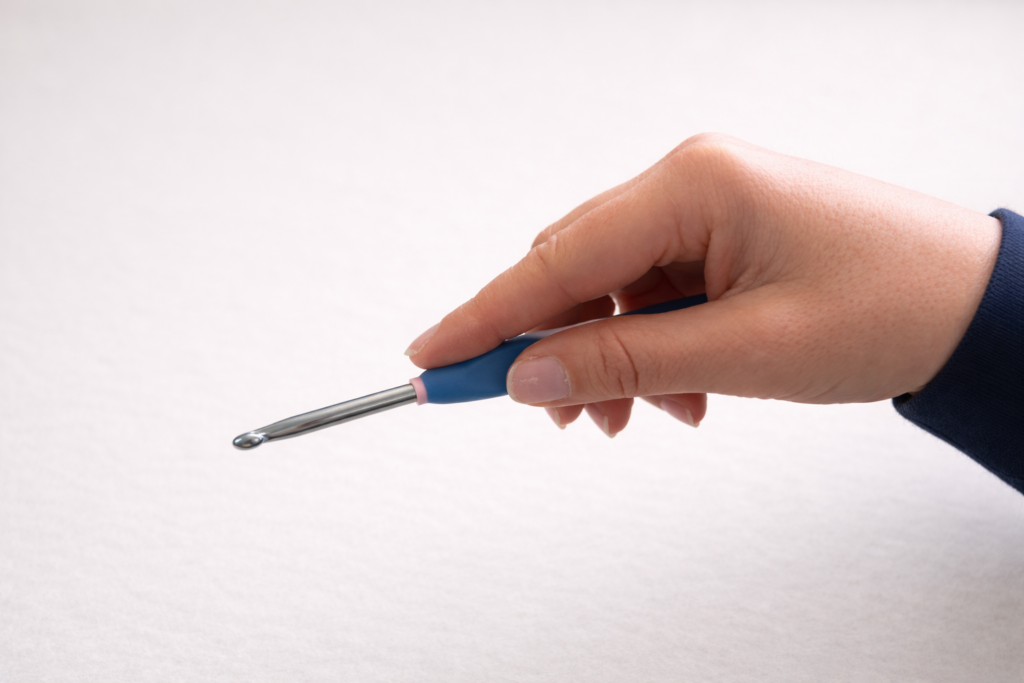
The Knife Grip
In the knife grip, you hold your hook much like you would hold a dinner knife.
- Your hand rests over the hook
- The hook moves with your wrist and forearm
- Often feels more stable for beginners
This grip is popular because it allows relaxed movements and works well for longer crochet sessions.
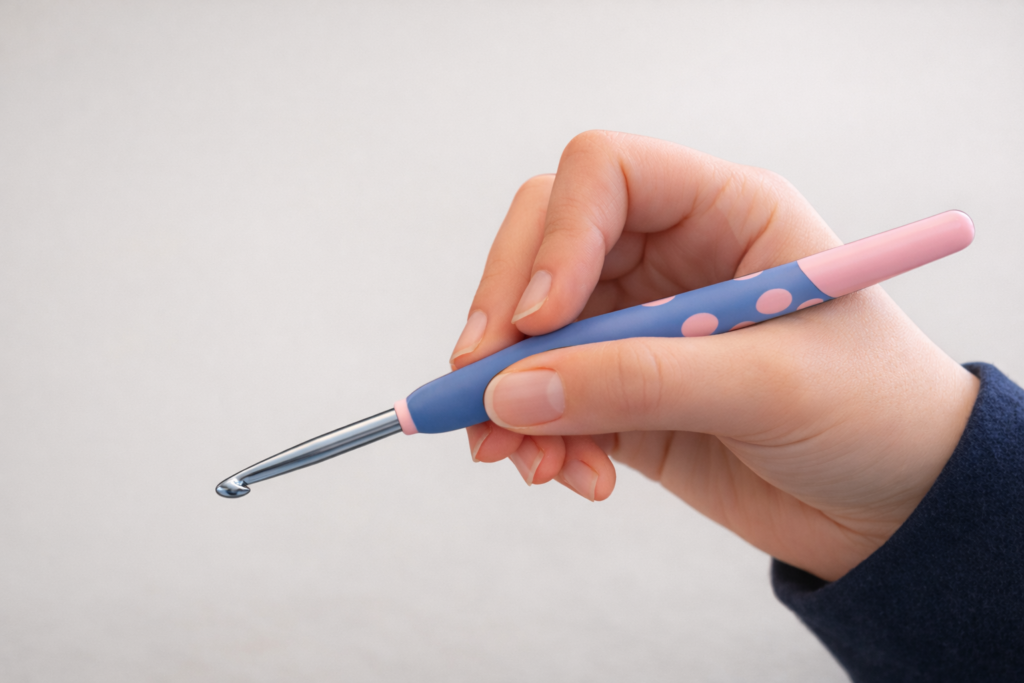
The Pencil Grip
In the pencil grip, the hook is held like a pencil or pen.
- Your fingers guide the hook
- Movements are often smaller and more controlled
- Some crocheters prefer this for detailed work
If this grip feels more natural to you, that’s perfectly fine—many experienced crocheters use it exclusively.
What About Yarn Hand Placement?
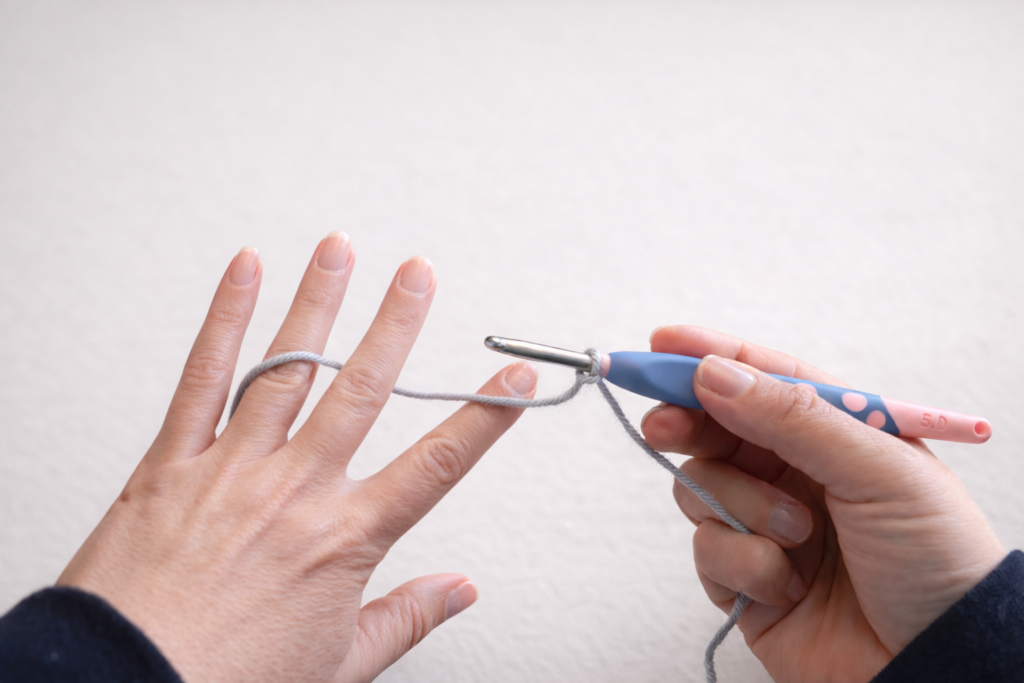
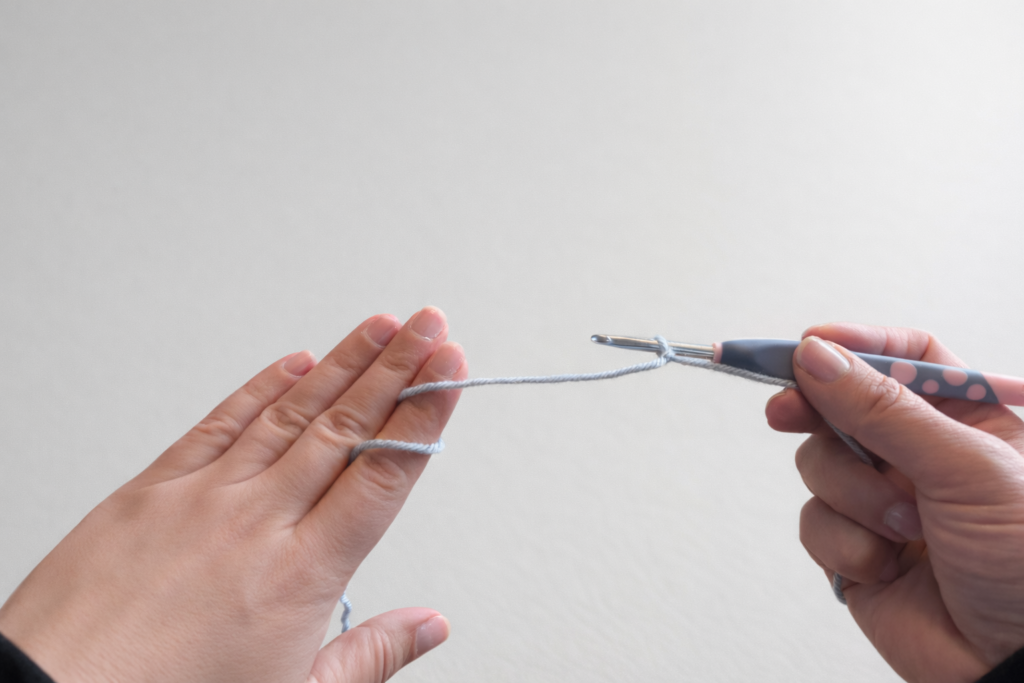
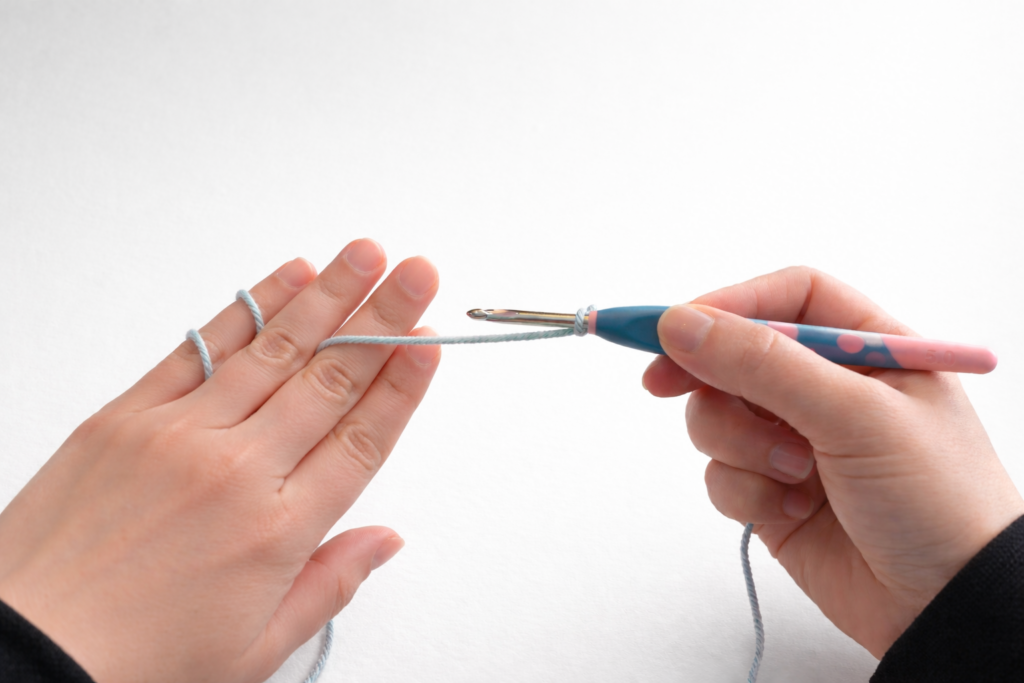
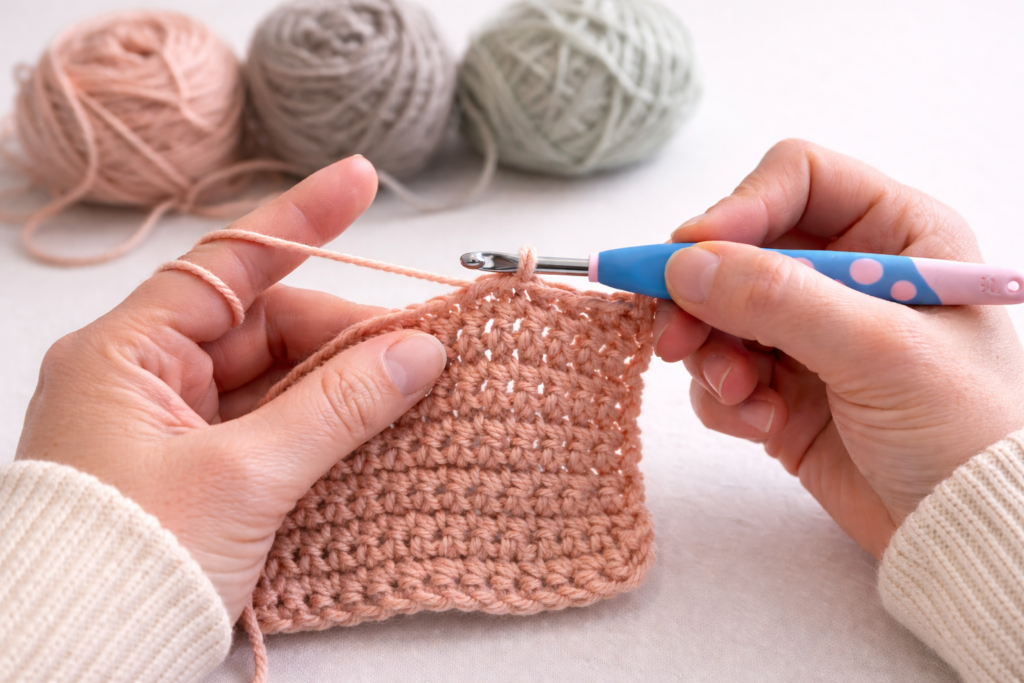
Your yarn-holding hand plays a big role in tension. Yarn is typically wrapped or guided through your fingers to create gentle resistance as you work.
Common approaches include:
- Draping the yarn over your index finger
- Looping the yarn once around a finger for more control
- Letting the yarn rest loosely in your hand
There’s no universal setup. The goal is to guide the yarn smoothly without gripping it tightly.
Understanding Crochet Tension
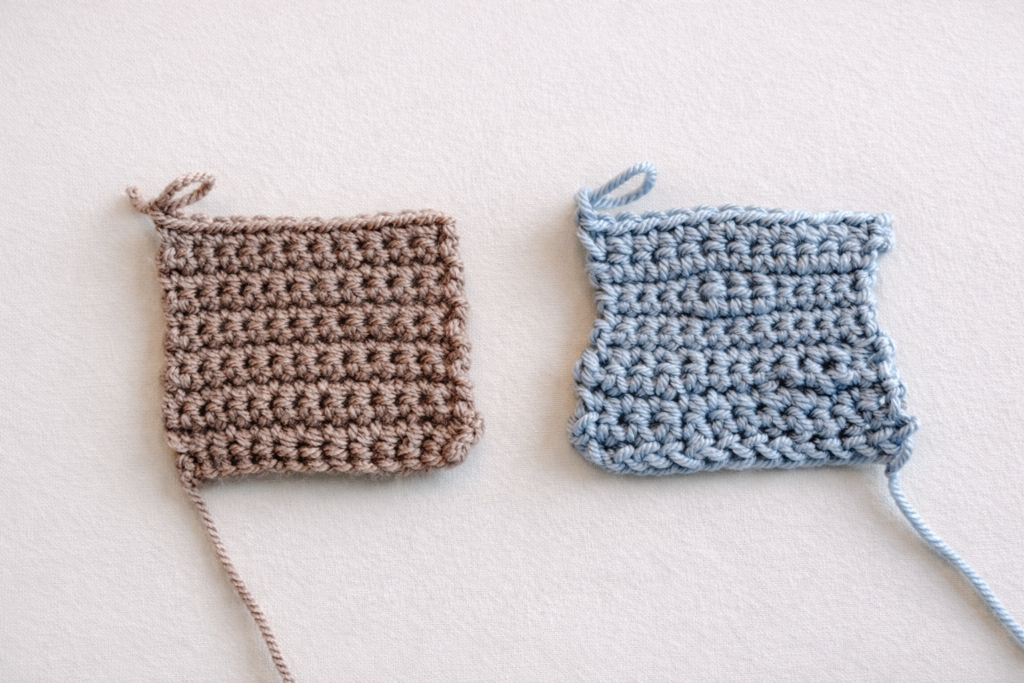
Tension refers to how tightly or loosely you hold your yarn as you crochet. It affects:
- Stitch size
- Fabric drape
- Overall consistency of your work
Many beginners struggle with tension at first, and that’s completely normal.
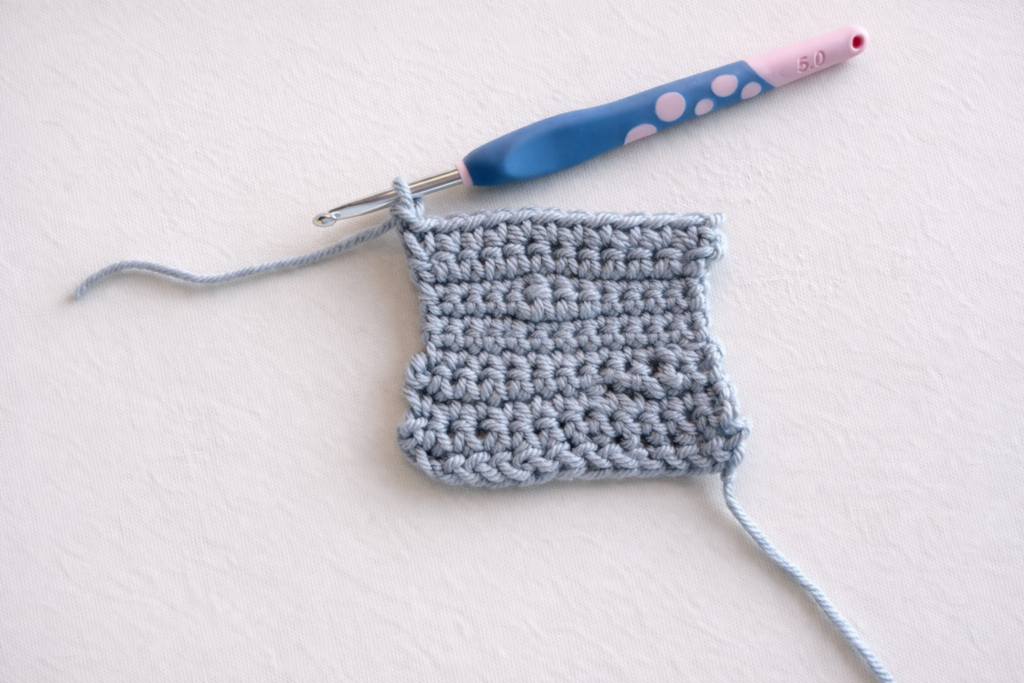
Signs Your Tension May Be Too Tight
- Hard to insert your hook into stitches
- Your fabric feels stiff
- Your hands tire quickly
Signs Your Tension May Be Too Loose
- Gaps between stitches
- Uneven stitch sizes
- Fabric looks floppy or inconsistent
Tips for Improving Tension
Tension improves naturally with practice, but these tips can help:
- Relax your hands — tight hands lead to tight stitches
- Slow down — speed often increases tension
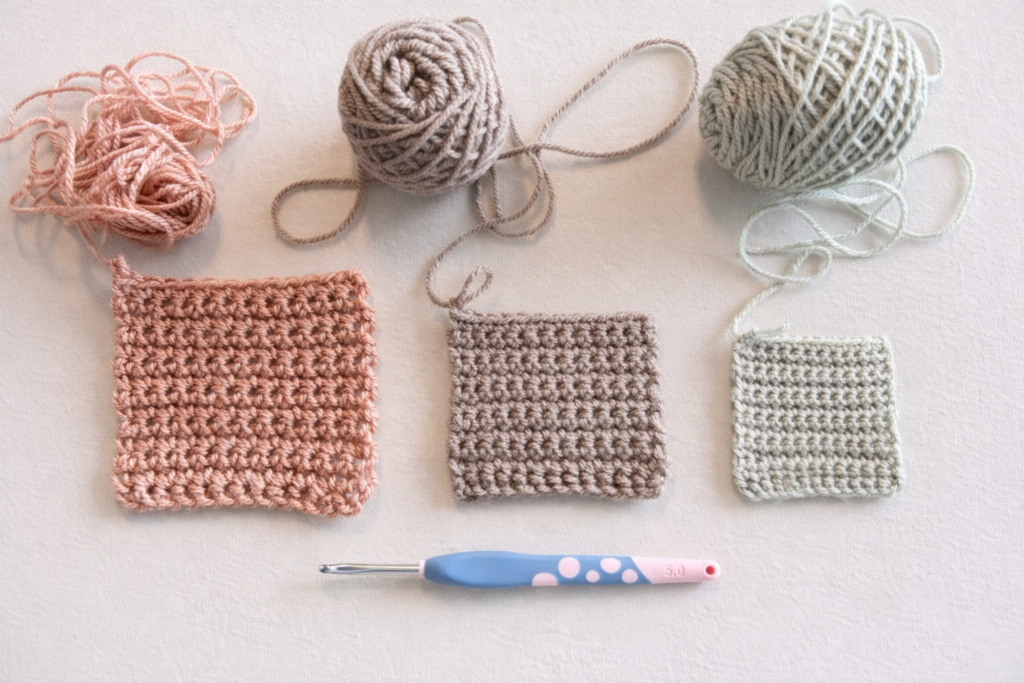
- Use the recommended hook size for your yarn
- Practice on small swatches instead of full projects
- Take breaks to avoid fatigue
Remember, even experienced crocheters adjust their tension when switching yarns or hook types.
A Gentle Reminder for Beginners
You don’t need perfect tension to be a “real” crocheter. Learning how your hands move, how the yarn flows, and what feels comfortable takes time. Every stitch you make helps build muscle memory.
If something feels awkward now, that doesn’t mean you’re doing it wrong—it simply means you’re learning.
👉 Up next: Essential Crochet Stitches — an overview of the core stitches you’ll see again and again in crochet patterns.
Keep practicing, stay patient with yourself, and enjoy the process. Crochet is meant to feel creative, not stressful 🧶💛