If you’ve ever read a crochet pattern and felt like it was written in another language, you’re not alone. Crochet has its own set of terms, abbreviations, and measurements that can feel confusing at first—but once you understand the basics, patterns become much easier to follow.
In this lesson, we’ll break down the common “language” of crochet so you can read patterns with greater confidence and less guesswork. We’ll review the basics to help you truly understand what everything means. I’ll focus on the most commonly used terms and conceps and will apply to a wide variety of patterns and techniques.

Understanding US Crochet Abbreviations
Crochet patterns are written using abbreviations to keep instructions concise, easy to follow, and less repetitive—especially in larger projects. In this lesson, we’re focusing specifically on US English crochet terms, which are the standard used in most patterns written in the United States. (If you’ve ever followed a UK pattern, you may have noticed the same stitches have different names—so it’s always important to double-check which terminology is being used!)
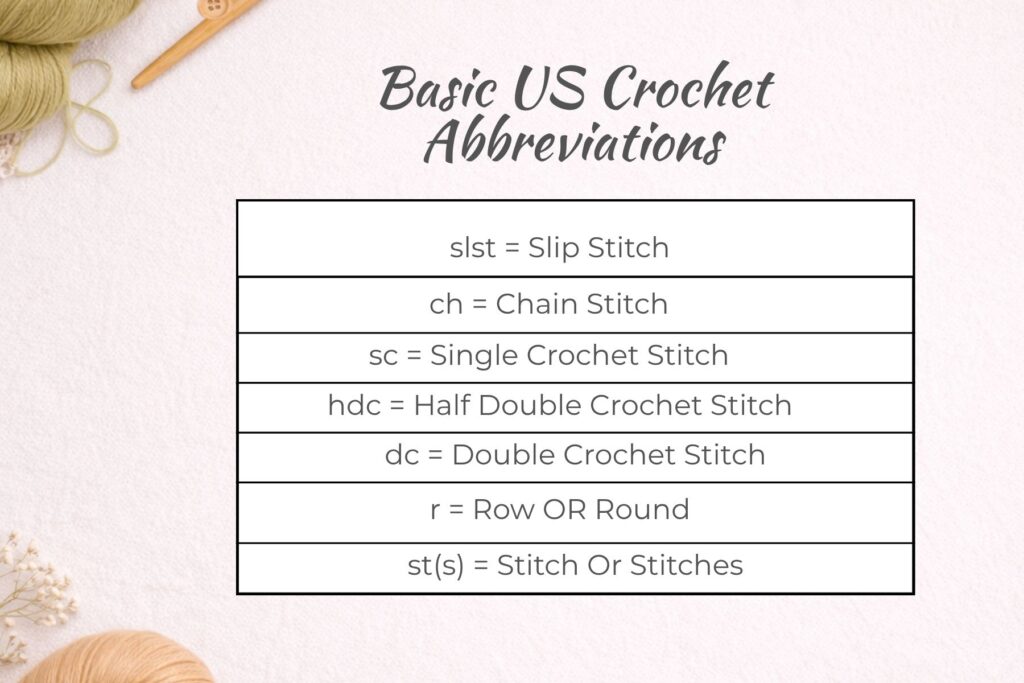
Some of the most common US crochet abbreviations you’ll see include:
- sl st – slip stitch
- ch – chain
- sc – single crochet
- hdc – half double crochet
- dc – double crochet
- st(s) – stitch(es)
These abbreviations are like shorthand for crocheters—they allow patterns to stay neat and readable rather than long and wordy. As you become more familiar with them, you’ll find your eyes quickly recognize the stitches without needing to think twice. The list above only lists the most common abbreviations for stitches. To see a full list of abbreviations, visit the Crochet Yarn Council website:
All patterns should include an abbreviation list or key near the beginning, and this is one of the most helpful sections to review before you start stitching. Not only will it define the abbreviations used, but it may also include special stitches, unique techniques, or designer-specific notes that are important for that pattern.
US vs. UK Crochet Terms: Why It Matters
One of the most important things to understand when reading a crochet pattern is which terminology it uses—US or UK. This detail can make a big difference in how your project turns out.
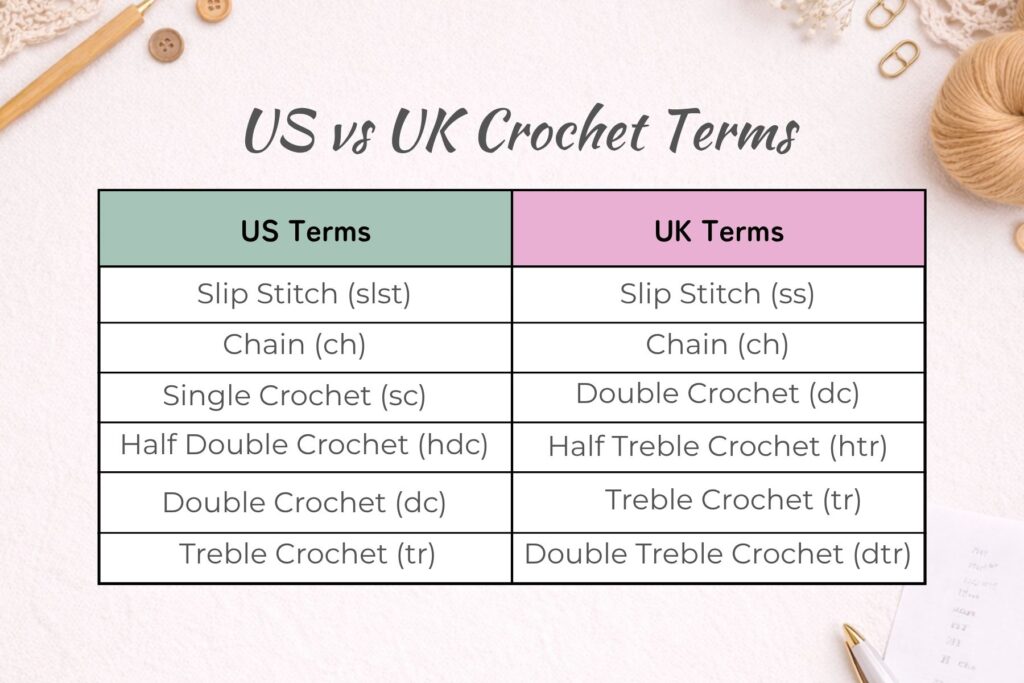
Crochet terms are not universal, and while the stitches themselves are the same, the names are different between the two systems. For example, a single crochet (sc) in US terms is called a double crochet (dc) in UK terms. That means if you follow a UK pattern thinking it’s written in US terms, your stitches—and your finished project—could look completely different from what was intended.
Here’s a quick comparison of a few common stitches:
Because of these differences, it is essential to always check which terminology a pattern is written in before you begin. Most designers will clearly state this at the beginning of the pattern, often in the materials or notes section.
If you’re ever unsure, look at the stitch descriptions or abbreviations used—this can usually give you a quick clue. Taking a minute to confirm this upfront can save you from frustration and ensure your project turns out exactly as expected.
Crochet Hook Sizes: Letters, Numbers & Millimeters
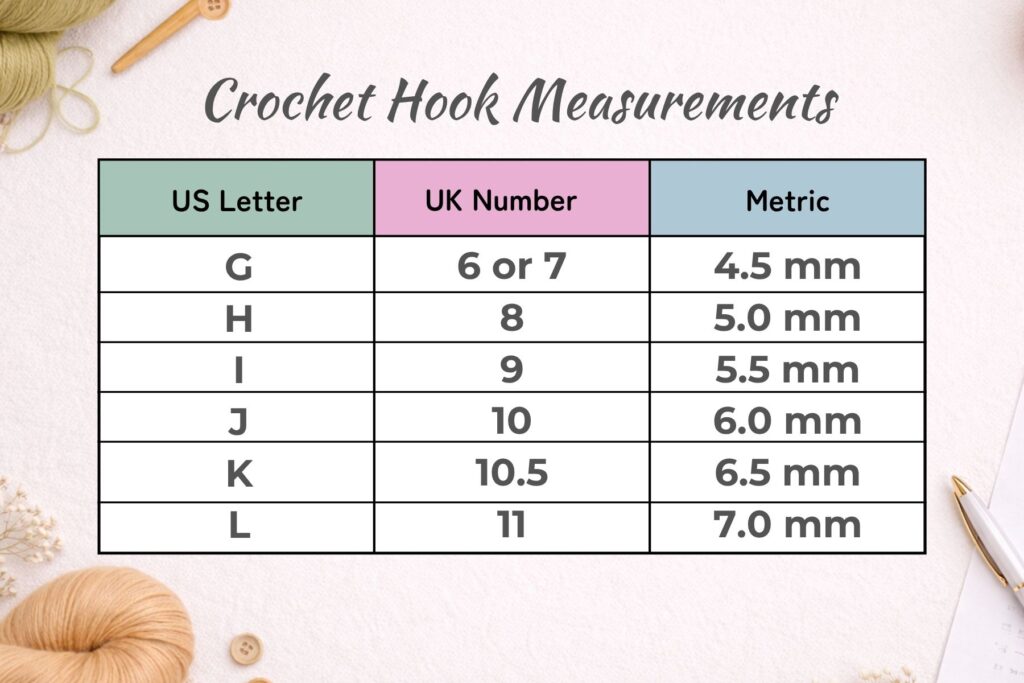
Crochet hook sizes can be listed in several ways, but they all refer to the shaft of the crochet hook, which determines the size of your crochet stitches (along with the yarn weight). However, if you know what hook size a pattern calls for, you can determine the correct hook size. Some hooks have all 3 measurements listed, but some do not, so having a quick reference and knowledge can be helpful.
Crochet hook sizes are listed by:
- US measurements are typically letter sizes (examples: H, I, J, K)
- UK measurements are traditionally numbered sizes (examples: 8, 9, 10, 11)
- The metric system lists sizes in millimeters (examples: 5.0 mm, 5.5 mm, 6.0 mm, 6.5 mm))
Patterns often include both the letter/number and the millimeter size. When in doubt, follow the millimeter measurement, as it’s the most consistent.
Understanding Yarn Weights & Categories
Yarn weight refers to the thickness of the yarn strand—not how much the yarn physically weighs. This thickness affects everything from how your stitches look to the overall size, drape, and feel of your finished project.
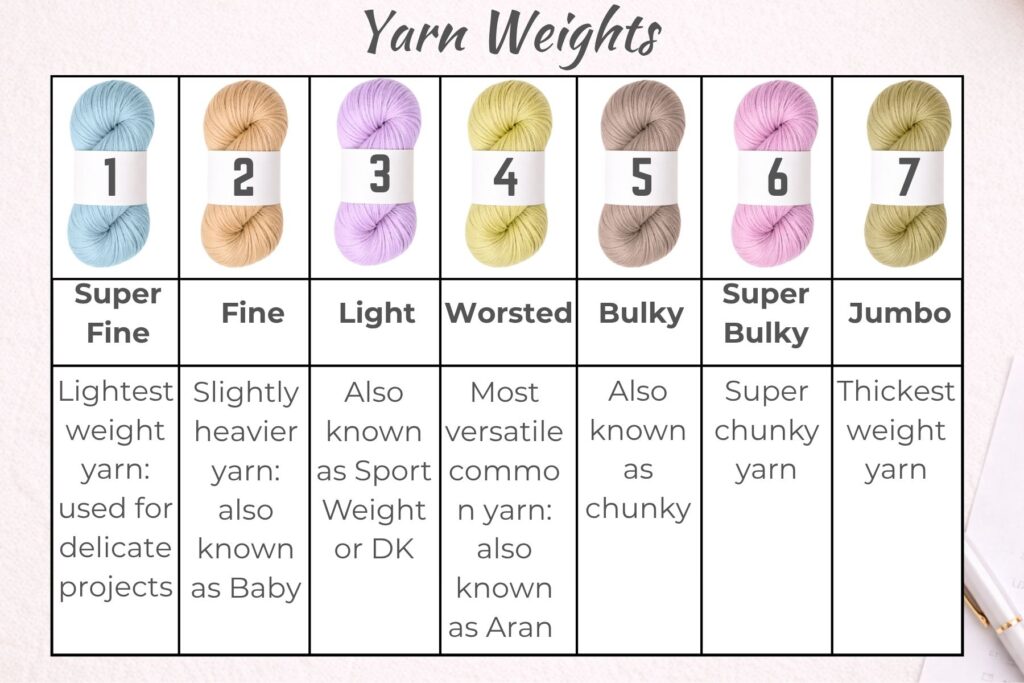
To make things easier, yarn is grouped into standardized categories, typically numbered as follows:
- 1 – Super Fine (sock, fingering)
- 2 – Fine (sport)
- 3 – Light (DK, light worsted)
- 4 – Medium (worsted, aran)
- 5 – Bulky
- 6 – Super Bulky
- 7 – Jumbo
While these categories are helpful, it’s important to know that not all yarn within the same weight category is exactly the same. This is especially true for the very common worsted weight (category 4) yarn. You’ll often find some worsted yarns that are slightly thinner (sometimes called light worsted) and others that are thicker (closer to aran weight). Even though they’re all labeled as “4 – Medium,” they can behave quite differently in a project.
Because of this variation, it’s always a good idea to do the following (I will go over this information in more detail later in the Crochet Basics Series):
- Check the recommended hook size on the yarn label
- Pay attention to the yards/meters per skein
- And most importantly, match gauge when it matters
Beginner patterns often use medium (4) worsted-weight yarn because it strikes a nice balance—it’s thick enough to see your stitches clearly, but not so bulky that it becomes difficult to handle. It’s also widely available in a huge range of colors and fiber types, making it a great choice when you’re learning or trying a new technique.
As you grow more comfortable, you’ll start to notice how different yarn weights—and even slight variations within the same category—can completely change the look and feel of your finished piece.
Pattern Notes & Terminology
In addition to stitch abbreviations, crochet patterns often include common shorthand terms and notes that help guide you through the pattern-making process. These aren’t stitches themselves, but they’re just as important for understanding how the pattern is constructed and how to execute each step correctly.
You may see terms like:
- FO – fasten off (secure your yarn at the end of a section or project)
- RS / WS – right side / wrong side (refers to the front and back of your work)
- YO – yarn over (wrapping the yarn over your hook, used in many stitches)
- SP – space (work your stitch into a gap between stitches rather than into the top loops)
These terms act like little instructions within the pattern, helping you know where to work, how to handle your yarn, and what side of the project you should be looking at.
You may also come across additional helpful terms such as:
- sk – skip (skip a stitch or space)
- beg – beginning
- inc / dec – increase / decrease
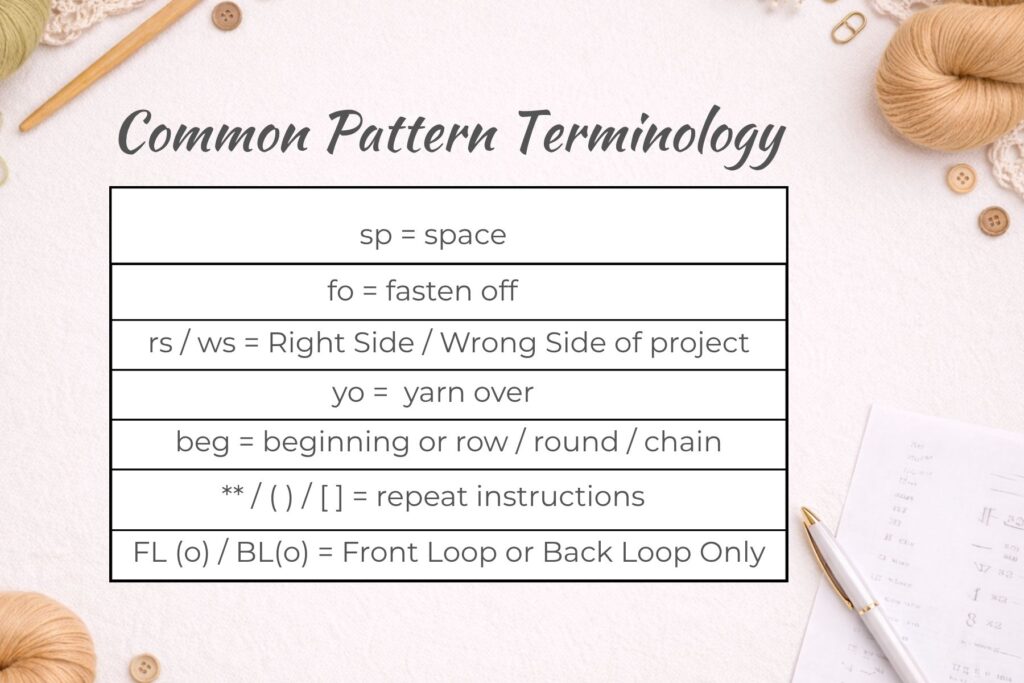
Most patterns will include a notes section at the beginning, and this is a great place to check for any special terminology, stitch explanations, or pattern-specific instructions. Designers often include helpful tips here—like whether turning chains count as stitches, or how repeats are structured.
At first, all of this shorthand can feel like learning a new language—but that’s exactly what it is! The more patterns you read and follow, the more these terms will become second nature. Before long, you’ll be able to glance at a pattern and understand it quickly, without needing to stop and look up each term.ge feels.
Crochet Slang You Need to Know
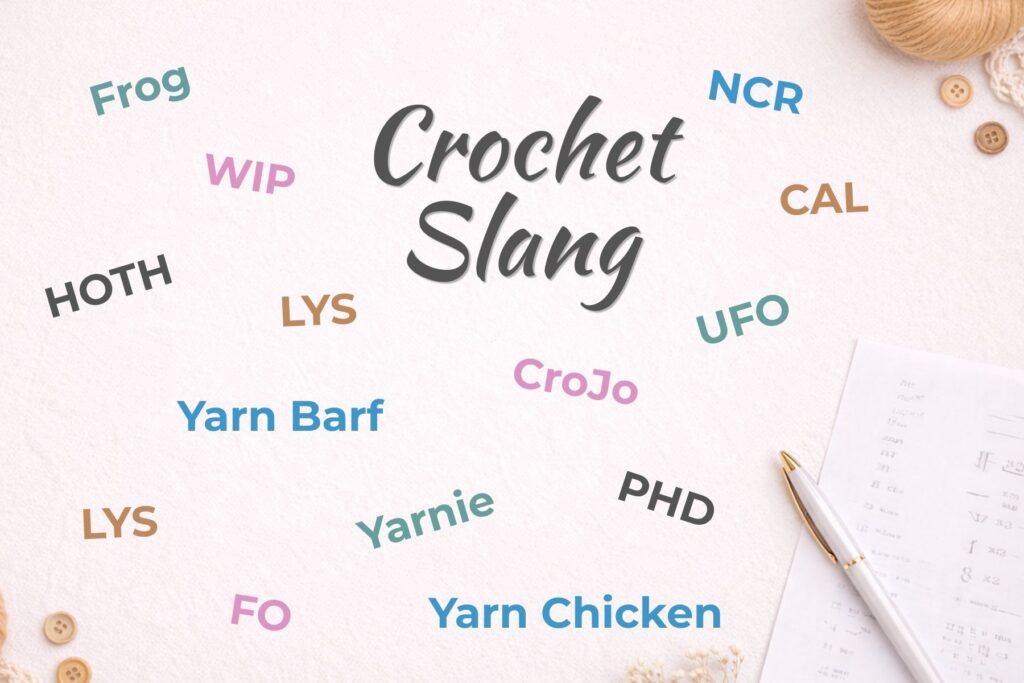
Beyond patterns and abbreviations, the crochet community has its own fun, creative slang that brings a lot of personality to the craft. Learning these terms not only helps you understand conversations in crochet groups and social media—it also makes you feel like part of the community. And honestly, it shows just how much humor and creativity crocheters bring to their yarn-filled world!
Here are some popular crochet slang terms you’ll see:
- Frog – to rip out your work (because “rip it, rip it” sounds like a frog’s “ribbit!”)
- WIP – Work in Progress (anything you’re currently making)
- HOTH / FOTH – Hot Off the Hook or Fresh Off the Hook (a newly finished project)
- LYS – Local Yarn Store
- NCR – Not Crochet Related
- CAL – Crochet Along (a group project where people make the same pattern together)
- UFO – Unfinished Object (that project you haven’t quite finished… yet)
- CROJO – Crochet Mojo (your motivation or creative spark for crocheting)
- Yarn Barf – the tangled mess that sometimes comes out when pulling yarn from the center of a skein
- Yarnie – someone who loves all things yarn
- PHD – Project Half Done (we’ve all got at least one!)
- FO – Finished Object
- Yarn Chicken – the game of trying to finish your project before you run out of yarn… who will win—you or the yarn?
These terms add a fun, relatable layer to crochet culture. The more you use them, the more natural they’ll feel—and you might even catch yourself laughing at just how accurate they are!
A Gentle Reminder
You don’t need to memorize every crochet term to be successful. It’s perfectly okay to pause, look something up, and take your time. Learning the language of crochet is part of the process—and it gets easier with each project.
👉 Up next: Gauge & Swatching — understanding why gauge matters and how to make a gauge swatch.
Take it one term at a time, and remember: every crocheter learns this language one stitch at a time